Our Montessori Preschool Homeschool Plan: Curriculum, Materials & More
I am living in the tension between being a trained Montessori teacher who wants a beautiful and fully authentic Montessori experience for my children and the reality of living in a relatively small home with a moderate homeschooling budget and limited time. I’m going to share what we are starting with for our Montessori preschool homeschooling and what I hope to add as we get going in the school year.
What Is a Montessori Homeschool Approach?
When I think about doing Montessori at home, or Montessori homeschool, I am thinking about preparing our home in a way that meets the needs of my children (both academically, physically, and spiritually). This means finding that balance within the reality of limited resources.
After spending 5 years in the classroom, perfecting it, preparing it, oozing over it, I recognize that I won’t be able to create that in my home. Not only can’t I; I simply don’t want to. I do want to create a beautiful, prepared environment filled with the essentials.
A Montessori classroom has something my home will never have: 24+ students, a trained guide and assistant, as well as thousands of dollars of beautiful materials meticulously prepared. This is beautiful, and if we had access to a Montessori school, I would likely send our twins to school. As we have it, there is no Montessori school near us.
What Will Your Montessori Homeschool Look Like?
I’m going to share with you what I’ve landed on for this first year of Montessori preschool at home. Some of it is from what I know from the classroom; other parts of it are from my AMI Montessori training, and the rest of it comes from looking through a variety of things others have done in their homeschooling. From there, choosing what fits into our family rhythms and what works for me as the guide.
I want the home to shine for what it naturally offers: a whole lot of practical life! There are so many ways for our children to learn, and at this stage (preschool) it won’t be primarily by sitting down and “teaching my children“. I want it to be the expereince of learning and work that we really develop this year.
In this post, I am going to share what resources I have found that will help us in our work to discover the beauty of the world while still being realistic with our home limitations. Maybe more importantly, my personal limitations as a busy work-from-home mom of almost 4-year-old twin boys.
Reading with Montessori Language
Let’s start with one of the main foundations that I hope to lay this school year: letter sounds and hopefully reading!
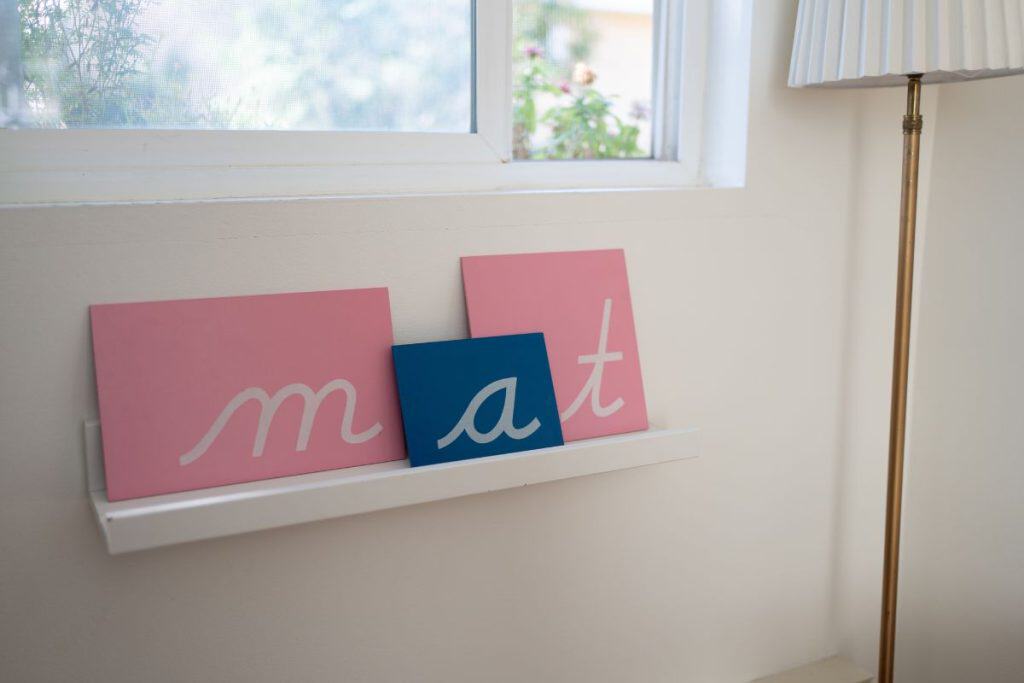
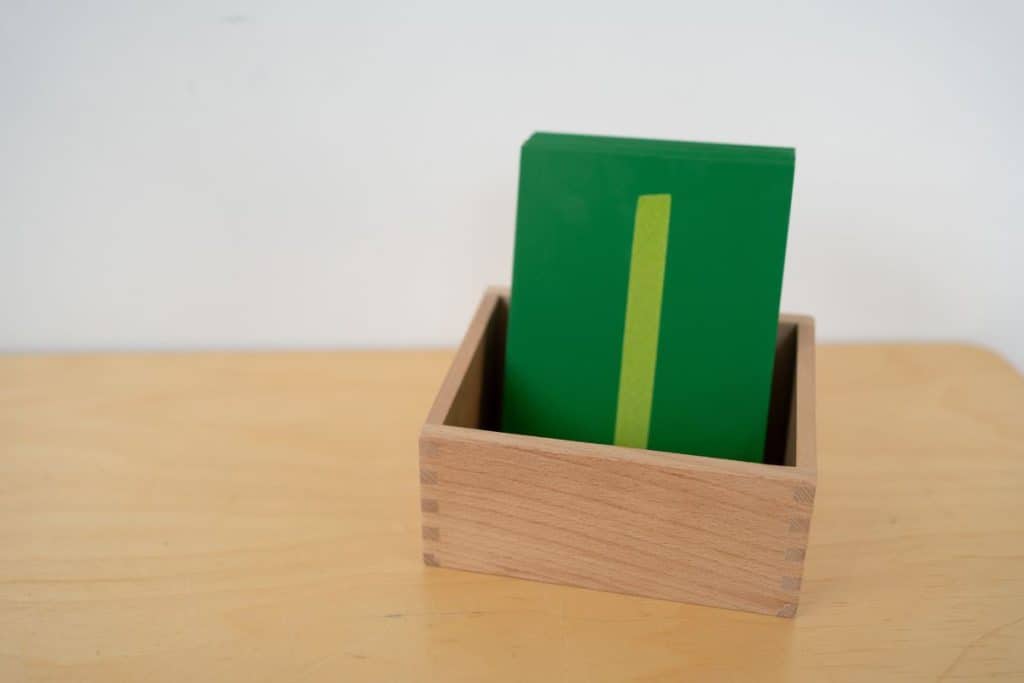
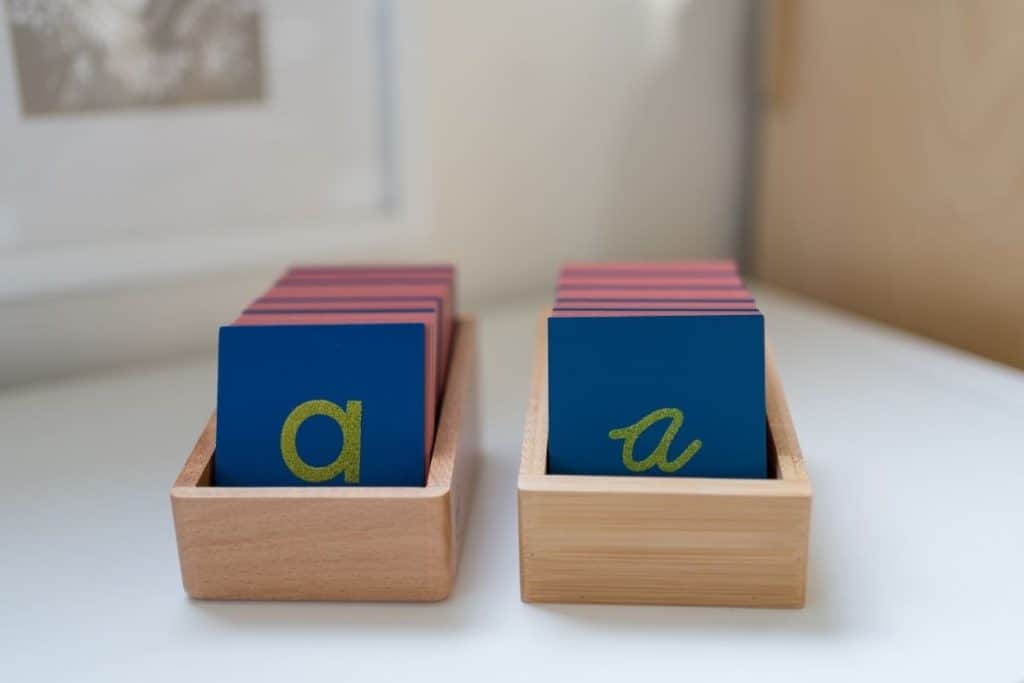
I am starting with Montessori sandpaper letters, a very traditional Montessori material that I had in my classroom. Sandpaper letters are simple, beautiful, sensorially rich, and, in my book, essential. At the school I worked at, we started with cursive, and so that is what I am going to try as well. I am hopeful, but I also recognize that we may make the transition to print (I’ll talk about my handwriting dilemma in a little bit).
Sandpaper Letters
- Curisve sandpaper letters (lowercase) (uppercase)
- Print sandpaper letter (lowercase) (uppercase)
- Mini Sandpaper Letters from Montessori Language (15% off applied at checkout!)
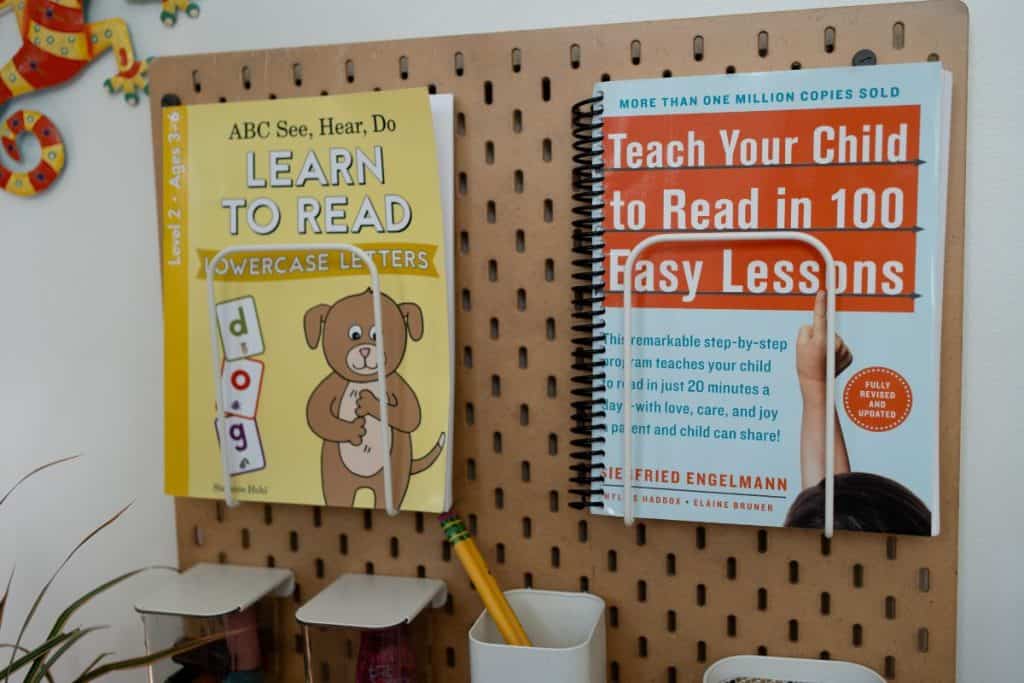
ABC See, Hear, Do Learn to REad
I was influenced to get this book, ABC See, Hear, Do Learn to Read Lowercase Letters, and I’ve loved using it. It is a super simple place to start out, very hands-on, as each letter sound gets a corresponding action for you to do, which I found really made it fun and has helped our boys to recall sounds.
Also pictured is the book Teach Your Child to Read in 100 Easy Lessons. I have less experience with this one, but I know many friends who either use it or learned how to read this way! I like how simple it seems, and I do want to give it a try. If you are looking for an open-and-go, no-fuss reading curriculum, this would be one worth looking into!
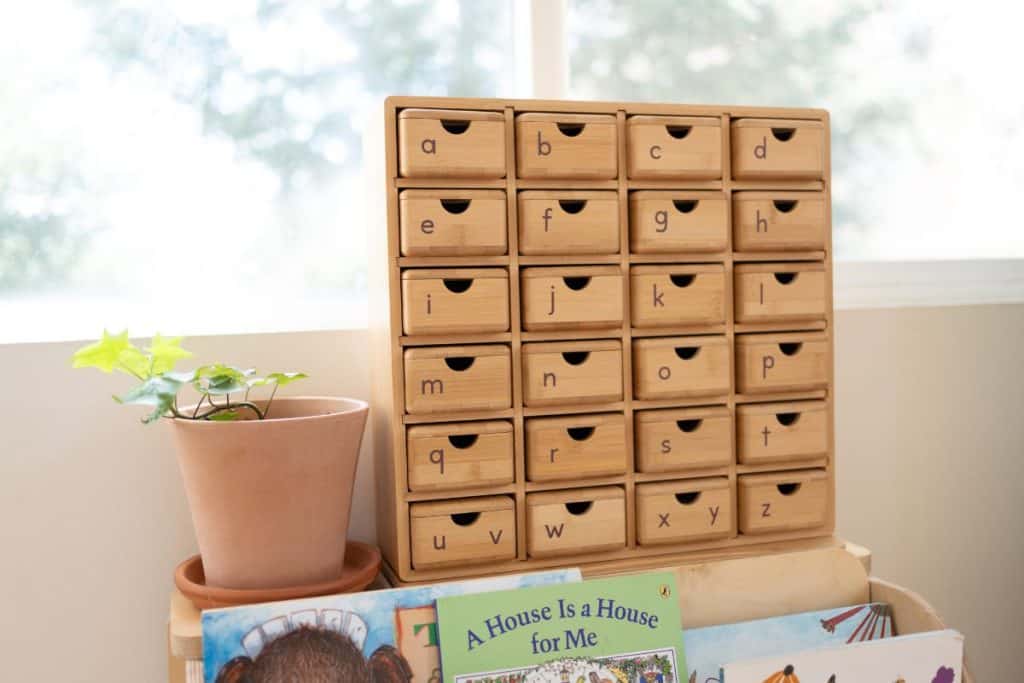
Phonetic Cabinet & Objects
I have been introducing letter sounds first with the miniature objects from Montessori Language. These are all beautifully sorted in the bamboo Phonetic Cabinet. Additionally, since this material is a bit of an investment, you can order just the miniature objects separately and not the cabinet.
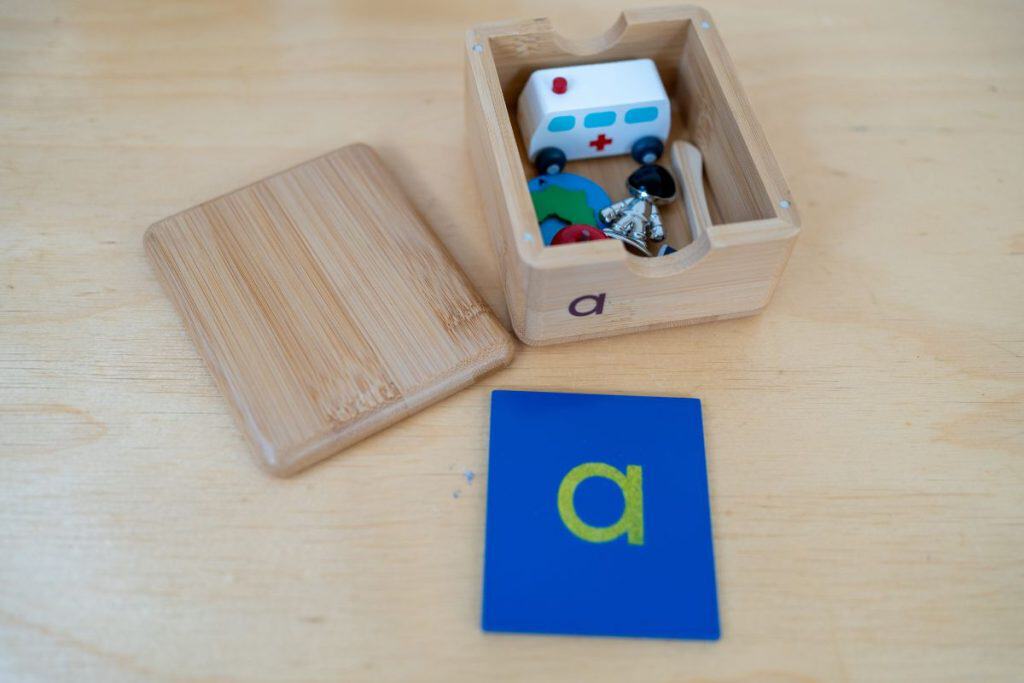
However, I have to say this is the most stunning Motnesori material I have seen in a long time. It is so attractive, well-made, and truly a piece that will last a long time. I love to see my boys’ excitement when they begin to work with it.
There are so many details they thought of; these are some of my favorites.
- Magnetic lids so that if the child holds the box upside down, none of the objects fall out.
- The letter is printed on the cabinet as well as on the box, so the child knows where to restore the box to.
- The objects are realistic and durable (made of wood or metal)
Sorting Trays & Mini Sandpaper Letters
We have the sorting trays and mini sandpaper letters to go along with our Phonetic Cabinet. This offers a really practical way to use the mini objects. The child can choose up to four different letter sounds (working up from 2-3 at first). They pour all of the contents into the large compartment and work to sort them into their categories.
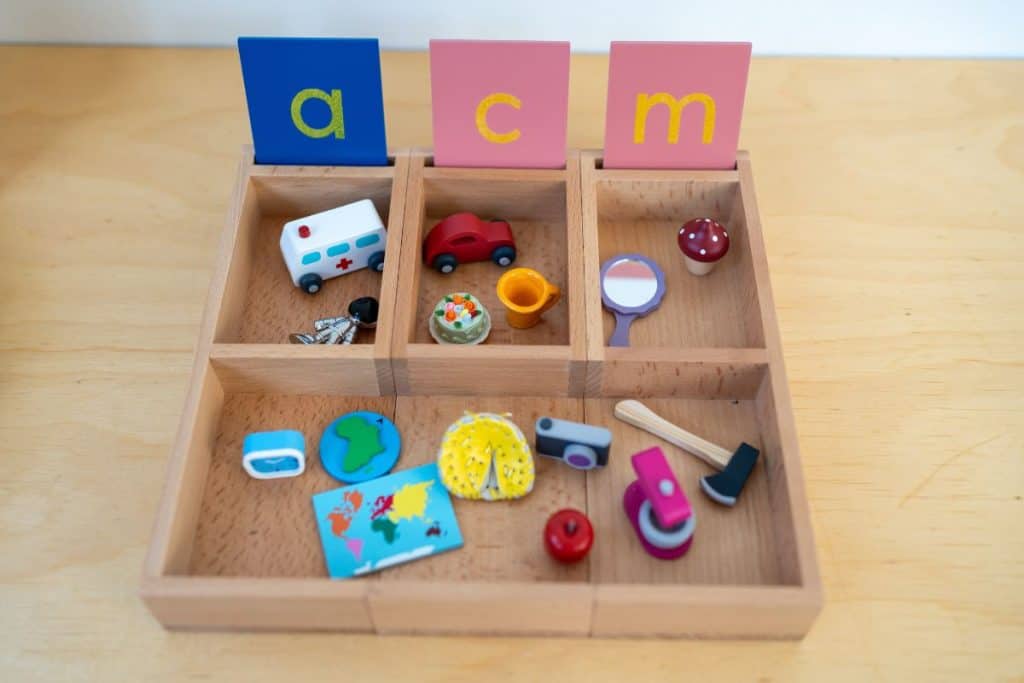
Here is a short video of the sorting trays, mini sandpaper letters, and objects in action with our 3-year-old son.
Movable Alphabet
Another keystone material in our homeschool will be the Movable Alphabet. We are using the Cursive Movable Alphabet from Montessori Language. I like how compact this is for home use. I also really love the storage box it comes in, keeping all of the letters neatly stacked and easy to use. Montessori Language also has a beautiful Print Movable Alphabet.
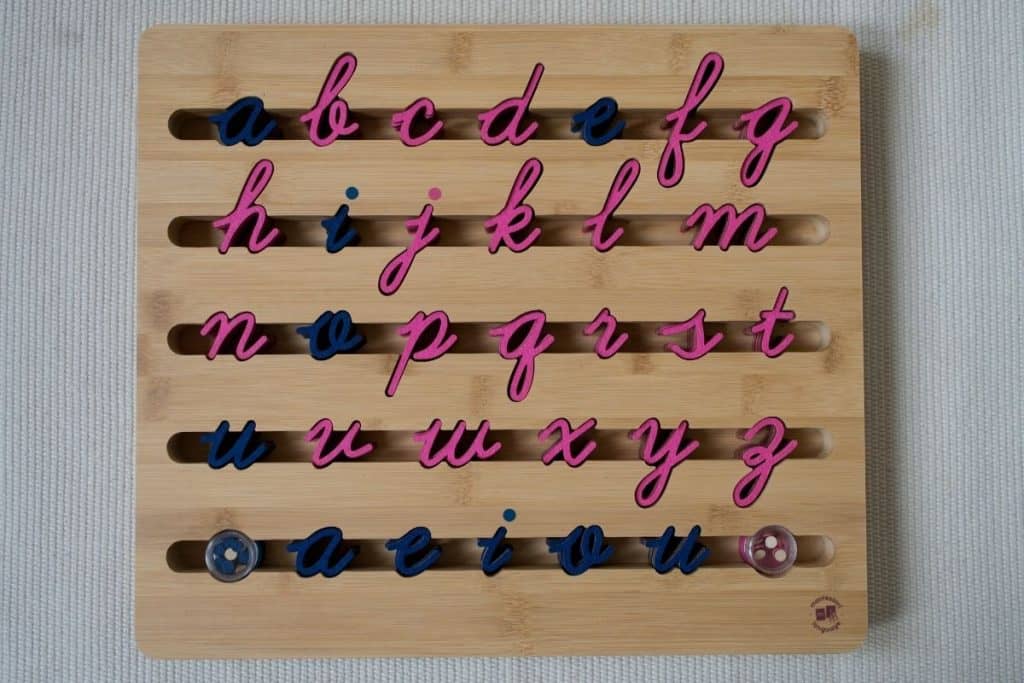
This movable alphabet from Montessori Language comes with a simple lined mat, which I like because the mini objects will be great for inspiring writing with the Movable alphabet.
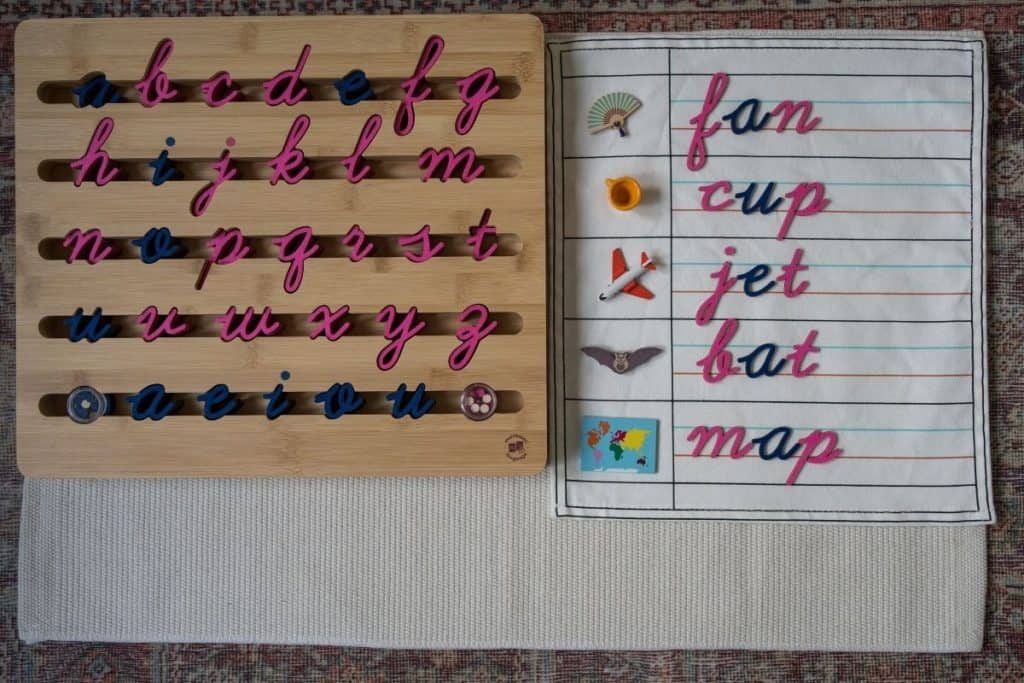
All About Reading
I hope that once I have introduced all of the letter sounds with the materials I mentioned above, I will add in All About Reading Level 1. I used this program from The Learning Press while I was teaching in the classroom, and I really enjoyed it. It is very comprehensive and has readers that go along with each of the 4 levels. Each story fits perfectly with the skills your child has learned so far. It is very hands-on and multi-sensory, which complements the Montessori method very well.
I got this magnetic chalkboard from Target, which is the recommended size to use for the All About Reading and All About Spelling programs.
Handwriting
I’ve heard amazing things about the “Handwriting Without Tears” program and am hoping to use it, but here’s yet another one of my dilemmas: I want to start with cursive, and their cursive books start as a transition from print to cursive. I asked others, and the consensus is that it would be a bit too advanced for my boys to start off with. Here are the materials I am going to start with first.
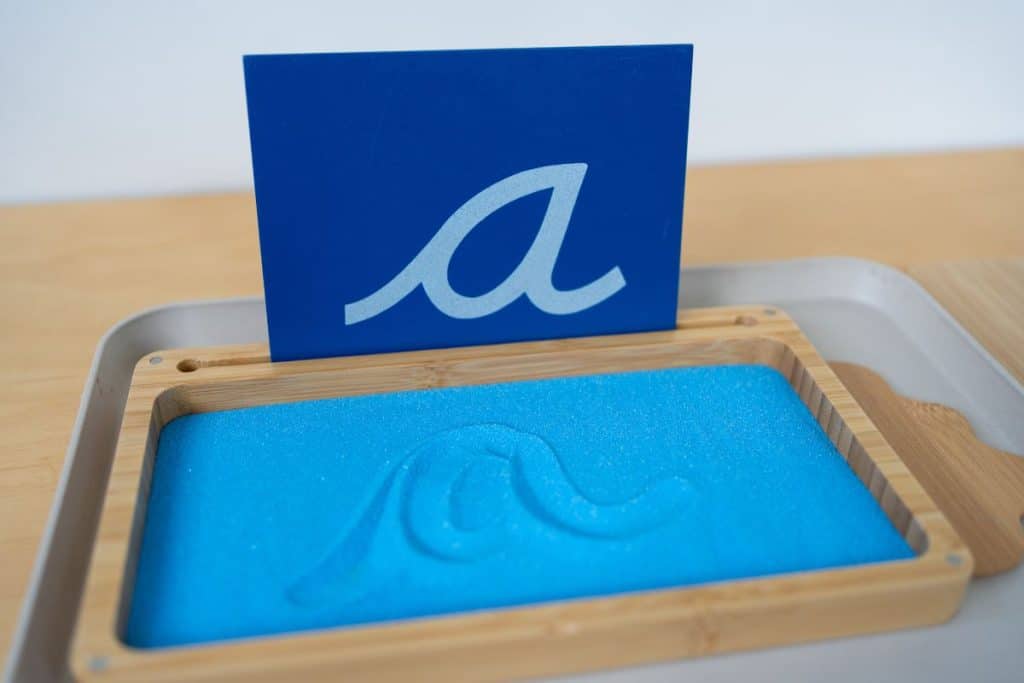
Sandpaper Letters & Numbers
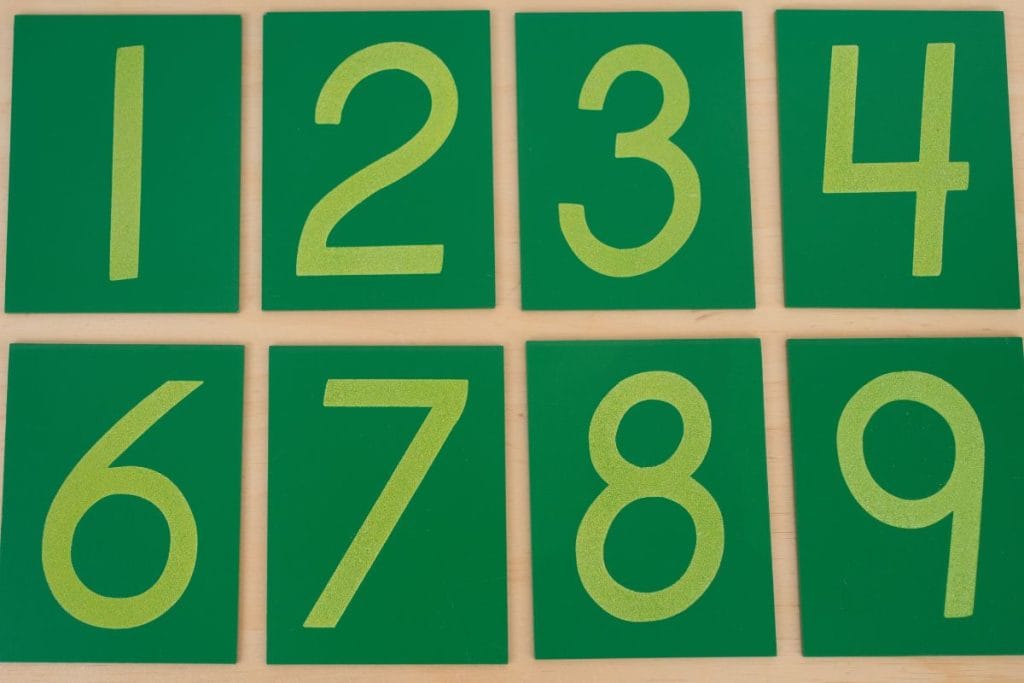
Sandpaper letters and numbers are a sensorial and hands-on way for a child to learn and practice the formation of letters and numbers. We are starting both the introduction to sounds and numbers with sandpaper letters and numbers.
Print sandpaper letters (lowercase) (uppercase)
Cursive sandpaper letters (lowercase) (uppercase)
Chalkboards
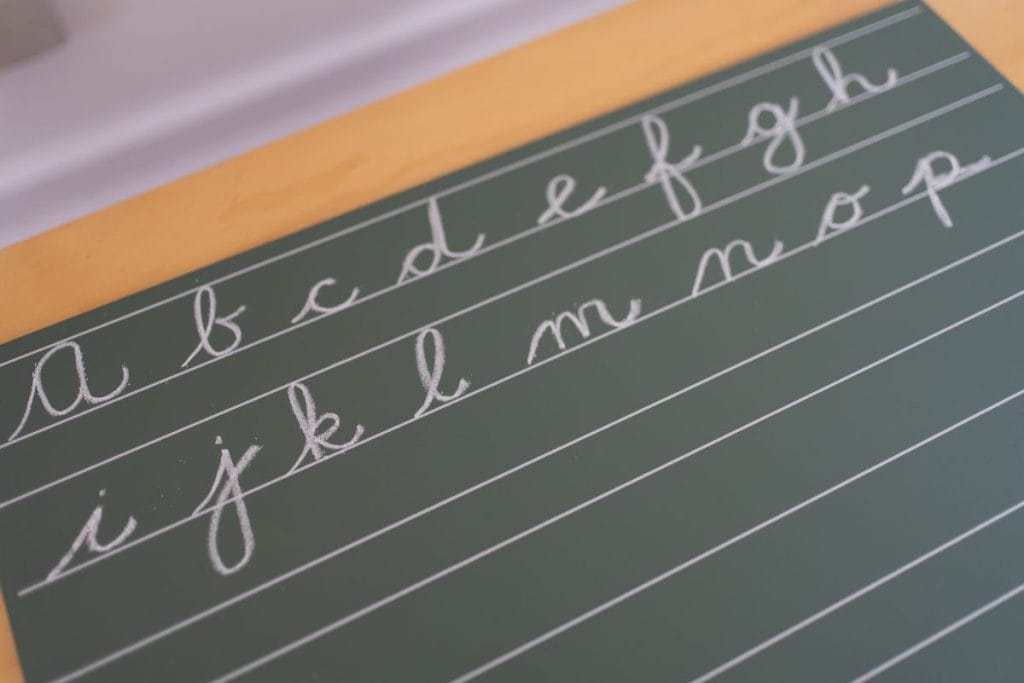
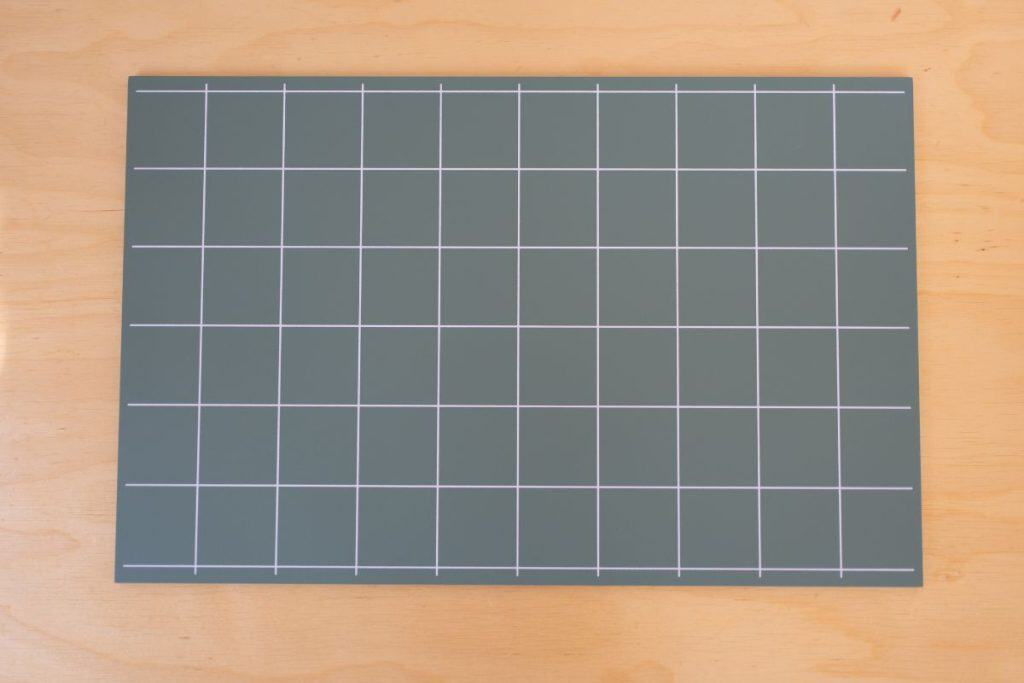
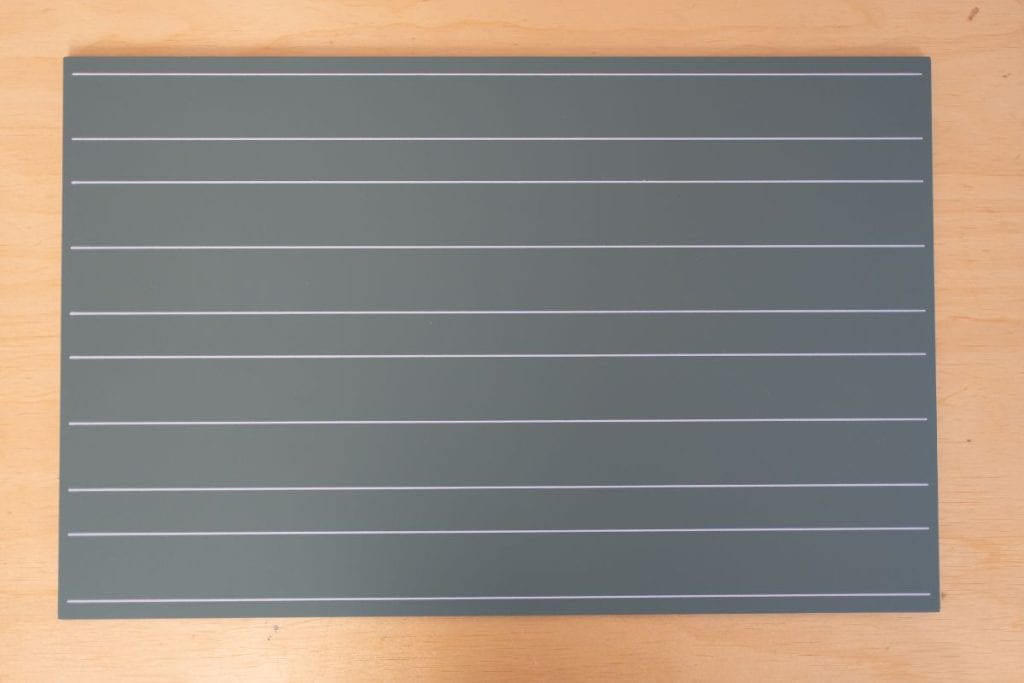
To start, we need to work on letter formation and pencil grip. I thought the Montessori chalkboards (which are double-sided) would allow for a lot of repetition and practice with letter and number formation.
Double-Sided Montessori Chalkboards
Sand Tray
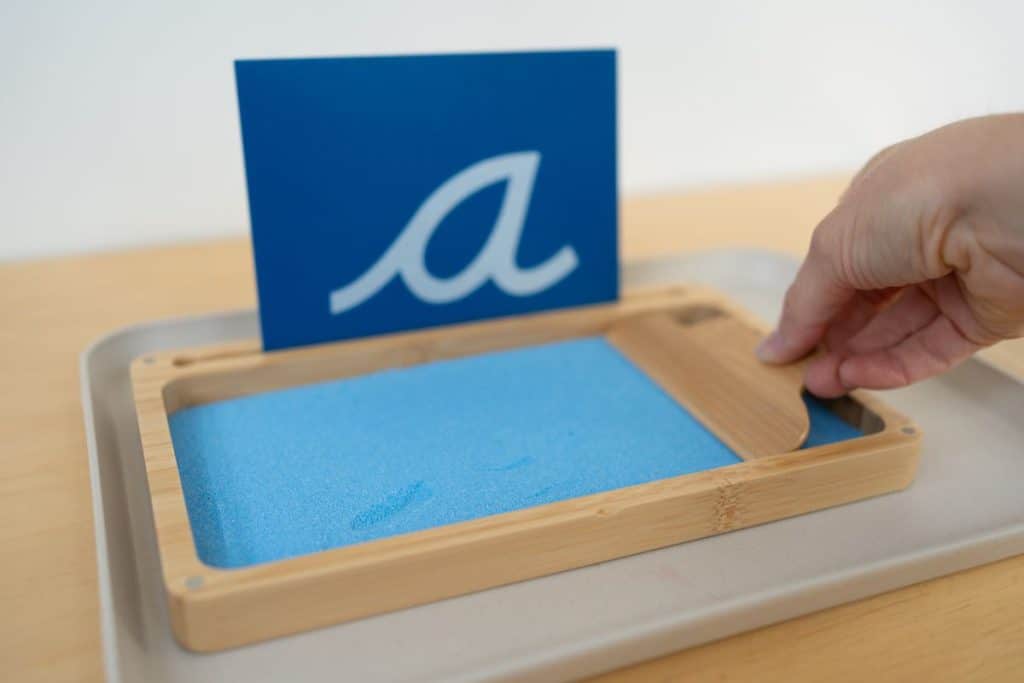
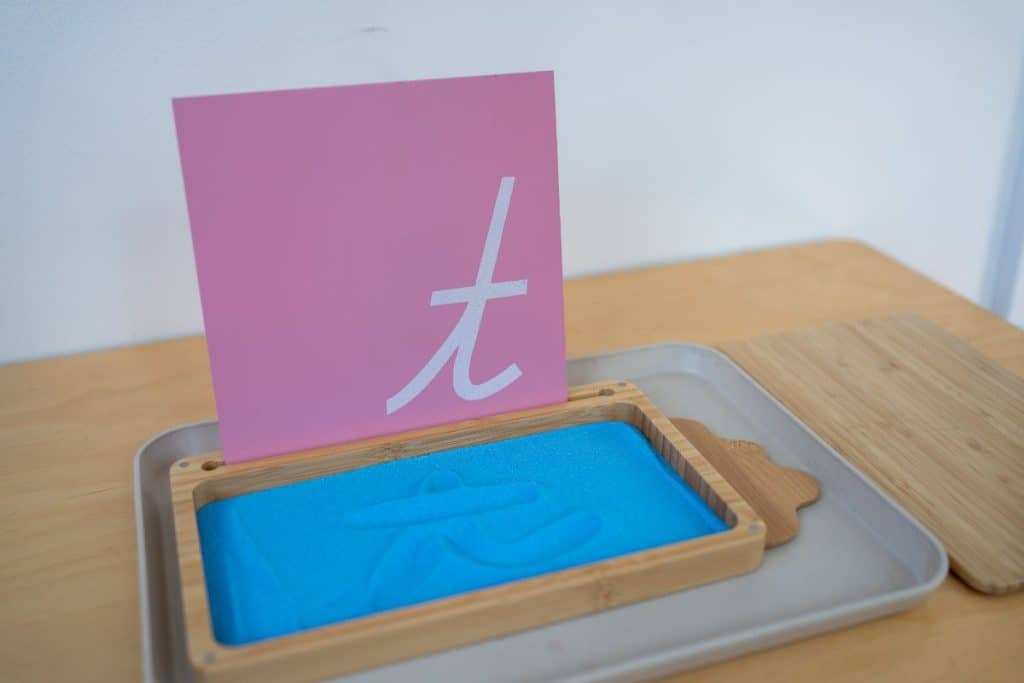
Another classic Montessori beginning handwriting material is a sand tray. This allows the child the opportunity to practice and repeat the formation of letters without the pressure of seeing them not formed correctly, which could be an obstacle for a new writer.
Wet-Dry-Try Approach
I stumbled upon this new writing approach, Wet-Dry-Try (I found this tutorial helpful for learning how to use this approach), which is a handwriting approach from the Handwriting Without Tears program. What I really liked about it was that I would be able to introduce cursive letter formation in a multi-sensory way on a chalkboard without starting with a workbook.
Preschool Math at Home
I stumbled upon the book Preschool Math at Home by Kate Snow. It will lay a solid foundation in counting to ten, looking at numbers zero to 10, writing numerals, comparing quantities and numbers, as well as some addition and subtraction stories.
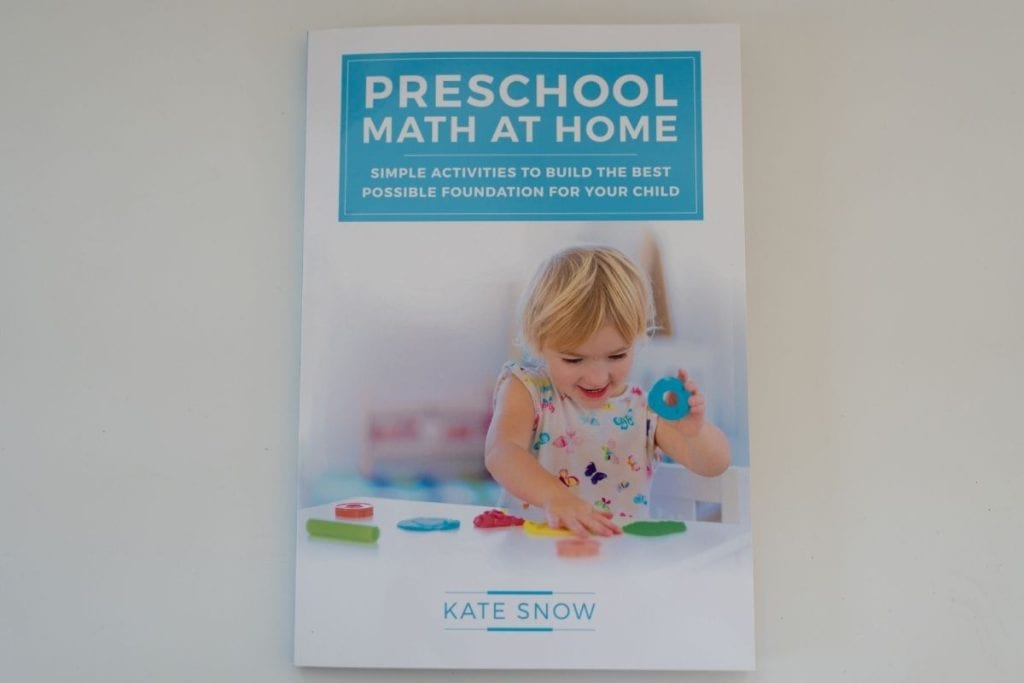
What I really like about the book is how you can work through these beginning preschool math concepts entirely with things you have in your home.
This post contains affiliate links, which means I make a small commission at no extra cost to you. See my full disclosure here.
All About Math
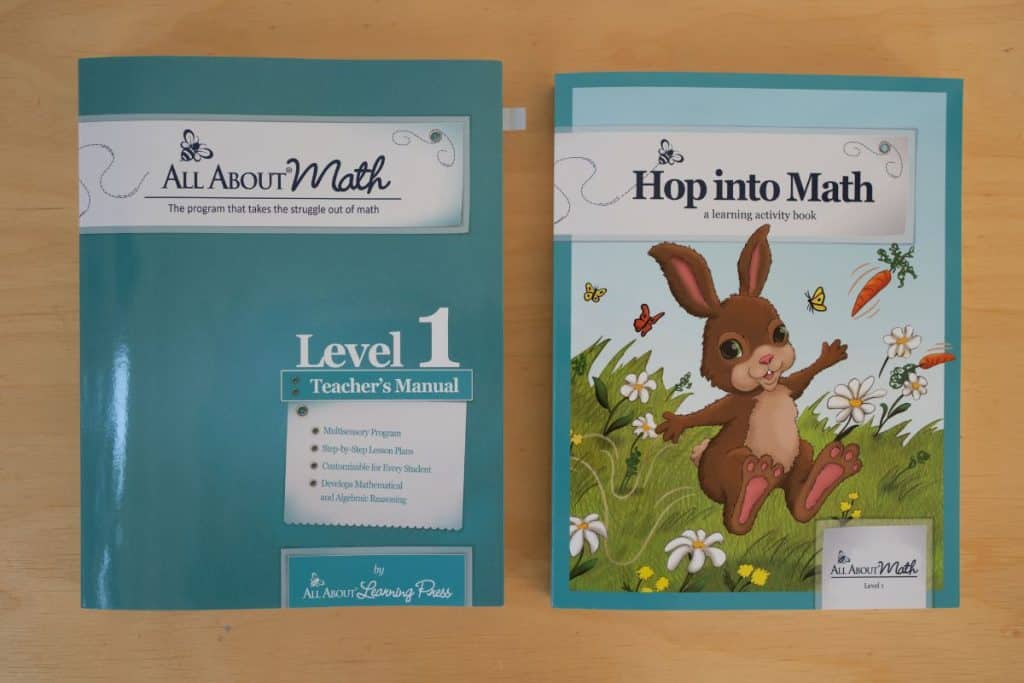
A few months ago, I ordered Level 1 of All About Math. I have started a few lessons, but not made it through much of the program yet. Stay tuned for an update on how I am liking this program for Math in the early years.
Hands On Activities for Kids (HOKA)
HOKA is an online resource with monthly bundles available for you to print. There are seasonal studies (12 total), Unit studies, art, and music studies each month. You can pick and choose what you print out and how to use it. I’m excited to give it a try!
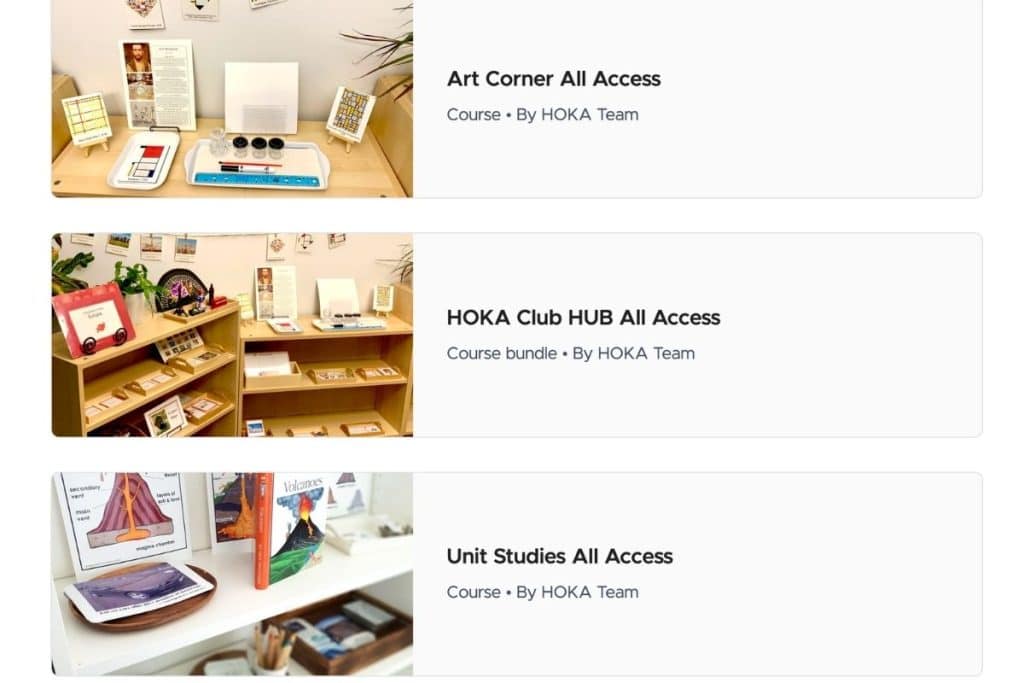
I love getting creative, but truthfully, I don’t have time to make little activities like this, so I would rather support the work of other Montessori teachers who have done this work and are sharing it with us.
Beautiful Feet Books: Early American History
I was recently introduced to Beautiful Feet Books, and I fell in love with the approach. Wanting a curriculum that is simple and beautiful but also supportive of the Montessori method, I was excited to find this.
I liked that it was open and go, but also not a worksheet. Books are the basis of the curriculum, which I love. I like that the depth to which you go in each lesson will vary, and you can base it on the needs of your child. I am not going to start this right away; I want to get started getting into a good rhythm with math and language before adding something more, but I’m excited to dive into their Early American History curriculum.
Additional Resources
Wall Calendar
We are starting out with this very simple monthly pocket calendar that I found on Amazon. I have my eye on this beautiful calendar from Treasures From Jennifer, but it just isn’t in the budget quite yet.
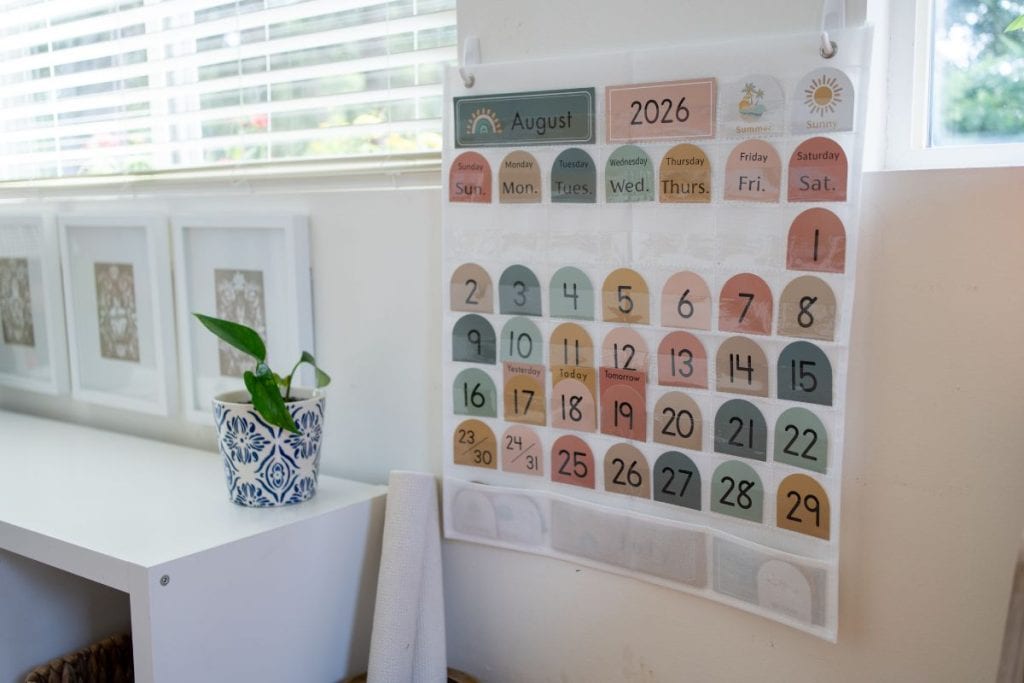
Weather and Temperature
Treasures from Jennifer also has a beautiful weather chart that would be a great addition to our Homeschool environment. I’m adding it to our wish list.
Lesson Planner
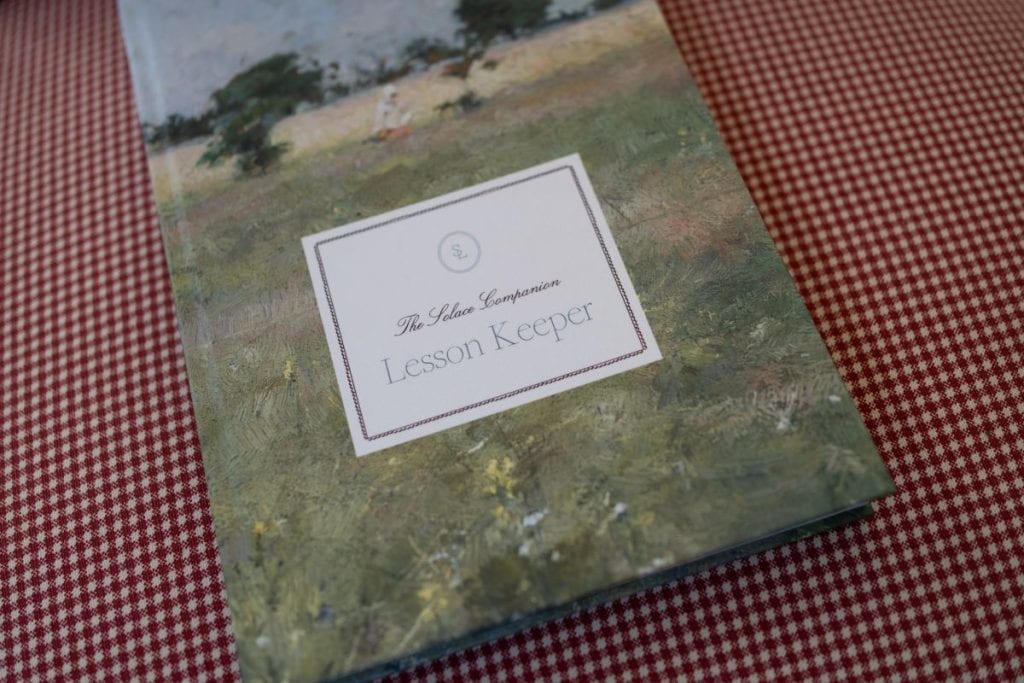
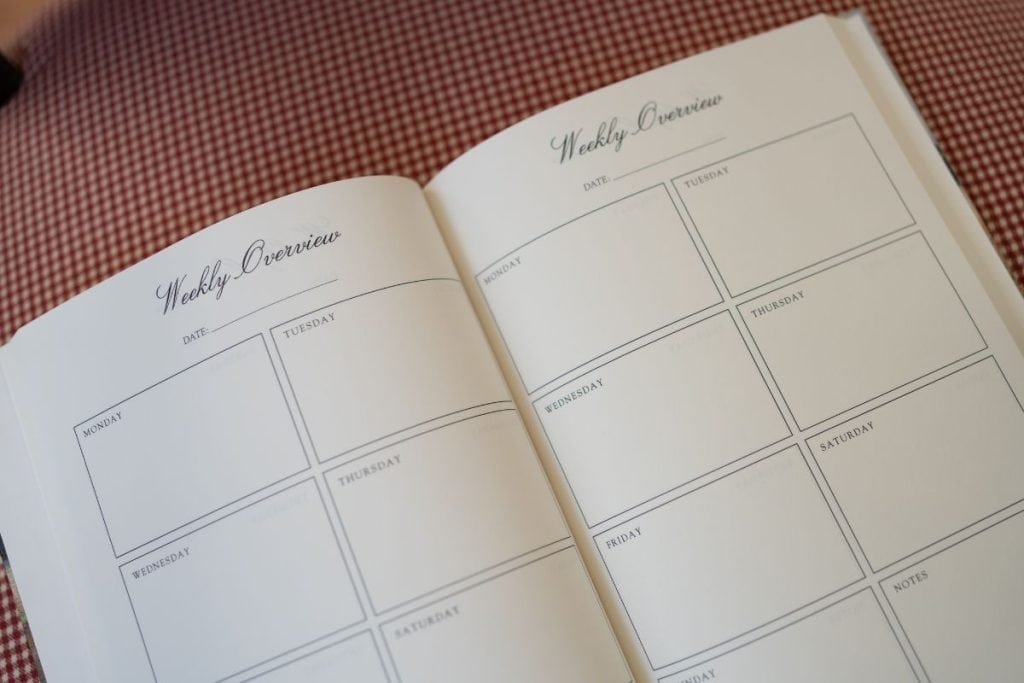
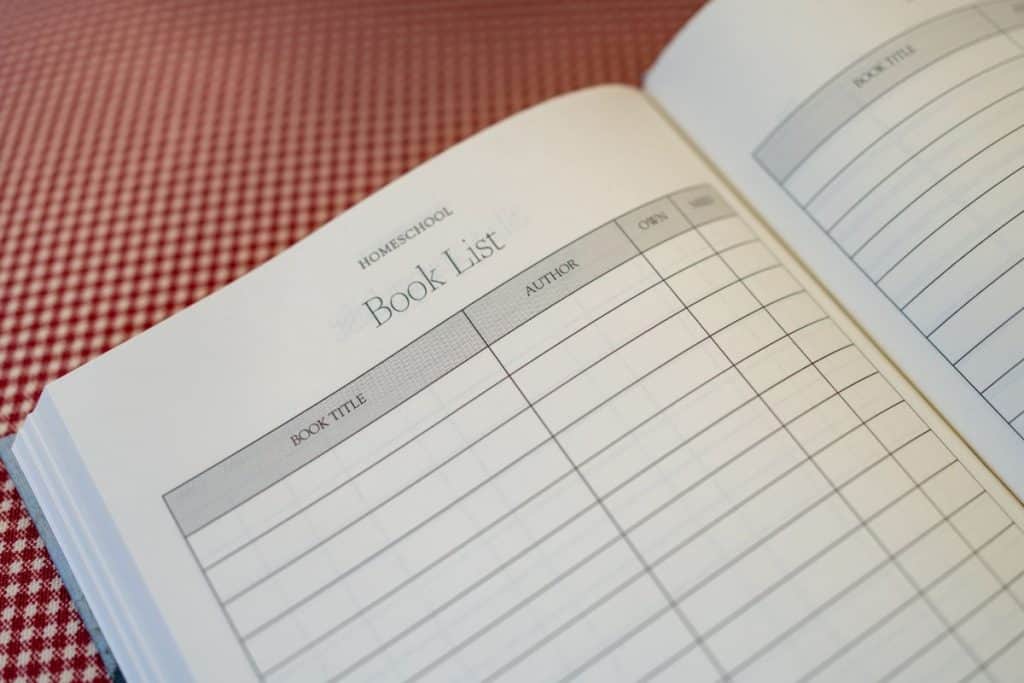
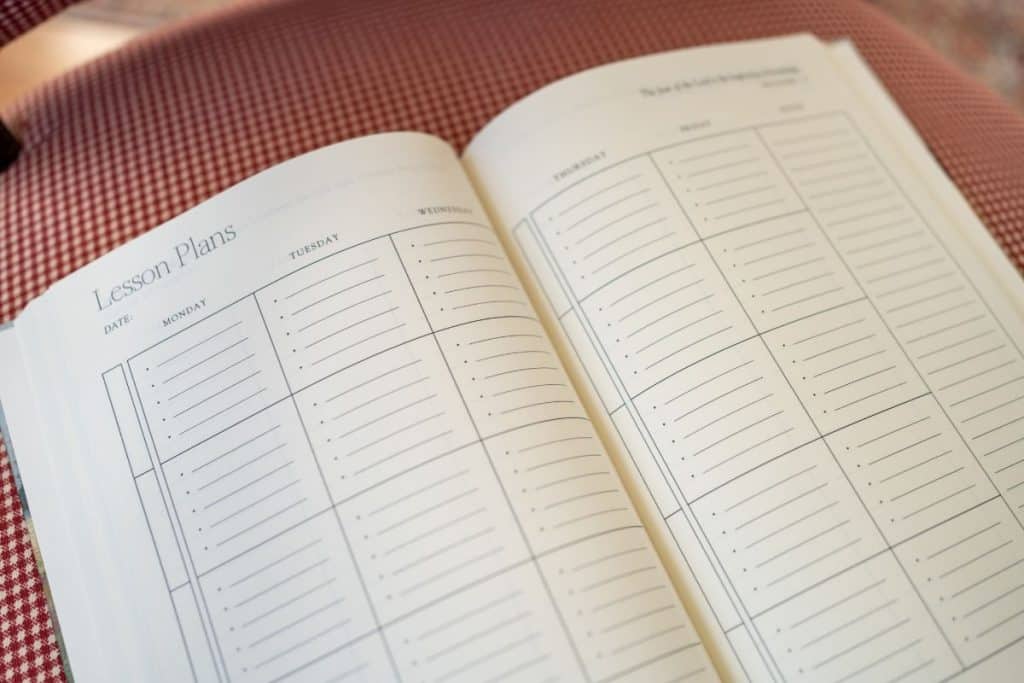
I wanted something to hold all the different thoughts you have as a homeschool mom, so I got this Homeschool Lesson Keeper book that I’m really looking forward to trying.